Paid Media · Competitive Teardown
How TheFork
wins on Meta
Reverse-engineering a market leader's paid playbook from the public Meta Ad Library, and a sharper strategy I'd test against it.
My Role
Paid Media Strategist
Method
Meta Ad Library (public data)
Market
France · Restaurant booking
The Approach
You can read a competitor's whole playbook, for free.
The Meta Ad Library makes every active ad on Facebook & Instagram public. For a paid marketer that's a goldmine: you can see exactly which hooks, offers and formats a brand is betting on right now. No budget, no guesswork.
I tore down TheFork (LaFourchette), France's dominant restaurant-booking platform, and a direct analogue to the product I grow at Savyu. The most interesting finding: they don't just advertise to diners. They also run a parallel supply-side campaign to recruit restaurants.
−50%
The recurring offer anchor
2
Sides of the marketplace
4
Creative angles mapped
The Teardown
One offer, four angles, two audiences.
The same −50% anchor, expressed four ways: three to win diners, one to win restaurants.
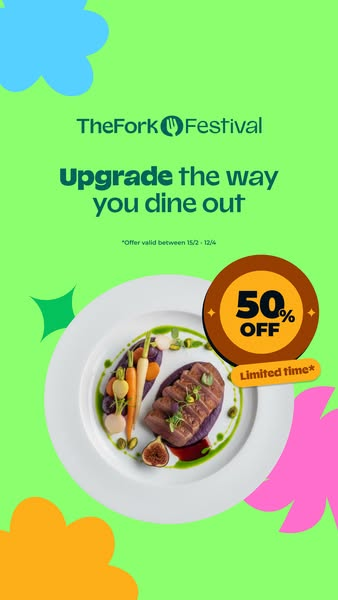 Deal · Event
 TheFork Festival, up to −50%
A standing discount packaged as a limited-time "Festival" to manufacture urgency. Bold, playful, offer-first.
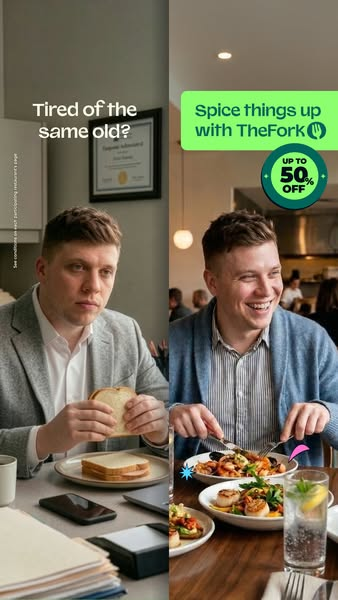 Problem → fix · Reel
 "Tired of the same old? Spice things up"
A before/after UGC-style video: dull desk sandwich vs. a vibrant meal out. Pain-led hook, then the −50% payoff.
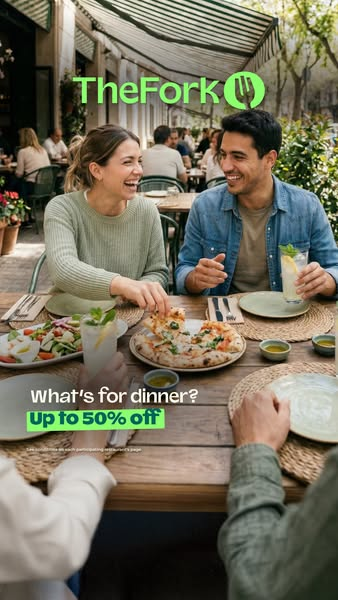 Lifestyle · Social proof
 "What’s for dinner? Up to −50%"
Real people enjoying a meal together, warm and aspirational, still anchored on the discount.
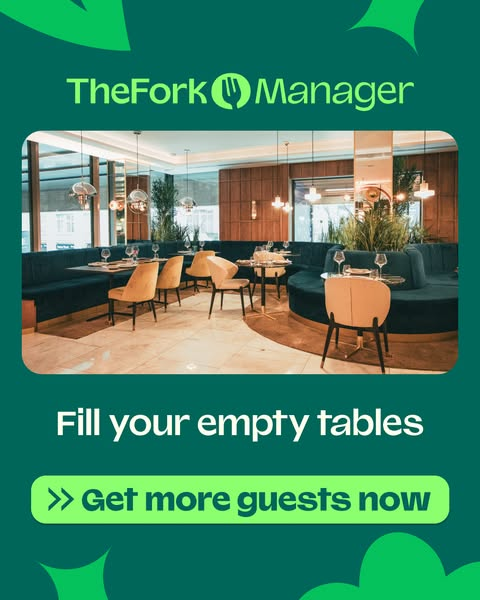 B2B · Supply side
 TheFork Manager: "Fill your empty tables"
"Join thousands of restaurateurs growing with TheFork Manager." The other half of the marketplace: acquiring restaurants, not diners.
Ads observed in TheFork's Meta Ad Library (France). Screenshots used for commentary/competitive analysis.
The Decision
Why TheFork, and why the Ad Library?
TheFork as the benchmark
TheFork is France's dominant player in the same market Savyu operates in — restaurant bookings, two-sided marketplace, commission model. Tearing down a direct analogue is more actionable than analyzing a generic brand: every pattern maps to a real decision I'd face.
Public data over estimates
Third-party tools (SEMrush, SimilarWeb) estimate ad spend. The Meta Ad Library shows the actual ads running right now — real creative, real formats, real angles. No inference needed. It's the most direct signal available without a budget.
Supply-side as the blind spot
Most paid-media teardowns focus on the consumer side. Marketplaces grow by recruiting supply too — and TheFork's Manager campaign was running in parallel, quietly. Spotting it mattered because the same logic applies at Savyu: activation drives more volume than acquisition alone.
What I noticed
Patterns worth learning from.
- 01
The discount is the anchor. Almost every diner-facing ad leads with "up to −50%", so value lands in the first second.
- 02
They sell both sides. Diner demand and restaurant supply (TheFork Manager) run in parallel. Most teardowns miss that supply-side spend entirely.
- 03
One offer, many hooks. The same −50% is dressed as a deal, a problem→fix Reel, and a lifestyle moment, so they can find the cheapest entry point per audience.
- 04
Events manufacture urgency. "TheFork Festival" turns an always-on discount into a time-boxed reason to book now.
My Strategy
What I'd test to beat it.
A teardown is only useful if it produces a plan. Here's the prioritized experiment backlog I'd run against this playbook.
Measured the right way: server-side conversions (CAPI), ROAS by city & cuisine, and value after the first booking, because a −50%-led funnel can quietly fill up with discount-seekers.
Application
Bringing it home to Savyu.
TheFork is the market leader's playbook. Here's how I'd adapt it for Savyu, where I drive growth, and where the economics reward a different focus. See my reservation analysis →
Advertise both sides
TheFork buys diners and restaurants. A marketplace grows on both, so I'd run supply-side acquisition in parallel, not just chase demand.
Quality over blanket discounts
Savyu earns per guest (pax), not per booking, so rather than a −50% for everyone, I'd target the high-pax cuisines and districts my reservation analysis surfaced.
One value prop, many hooks
Run problem-led, lifestyle and deal creative against the same promise, then scale whichever buys attention cheapest per audience.
Activate, don't just acquire
My data showed active partners drive ~4× the volume, so mirror TheFork Manager to onboard and activate restaurants, not just sign them.
Want this for your brand?
I'll tear down your competitors' ads and hand you a test plan.
Get in Touch